Sales Forecasting
Manufacturing forecasting guidance covering error, bias, demand variation, assumptions and decision usefulness.
Articles in This Topic
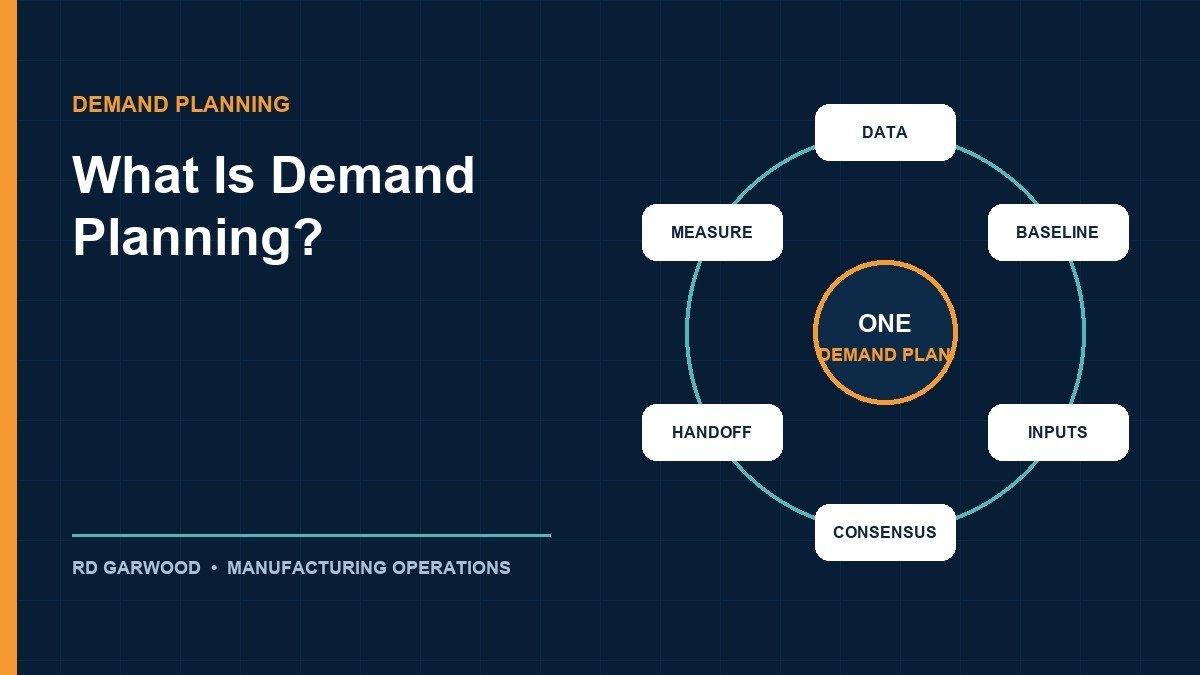
What Is Demand Planning? Definition, Process, and Manufacturing Examples
Demand planning is the cross-functional process of building one agreed forecast of what customers will buy, then using it to drive supply, inventory, and…

Forecast Value Added (FVA): Formula, Example, and Pitfalls
Forecast value added (FVA) measures whether each step of a forecasting process actually improves the forecast, by comparing every step’s error against the step…

Tracking Signal Formula: Calculation, Limits, and a Worked Example
The tracking signal formula is the running sum of forecast errors divided by the mean absolute deviation: TS = RSFE ÷ MAD. The result…
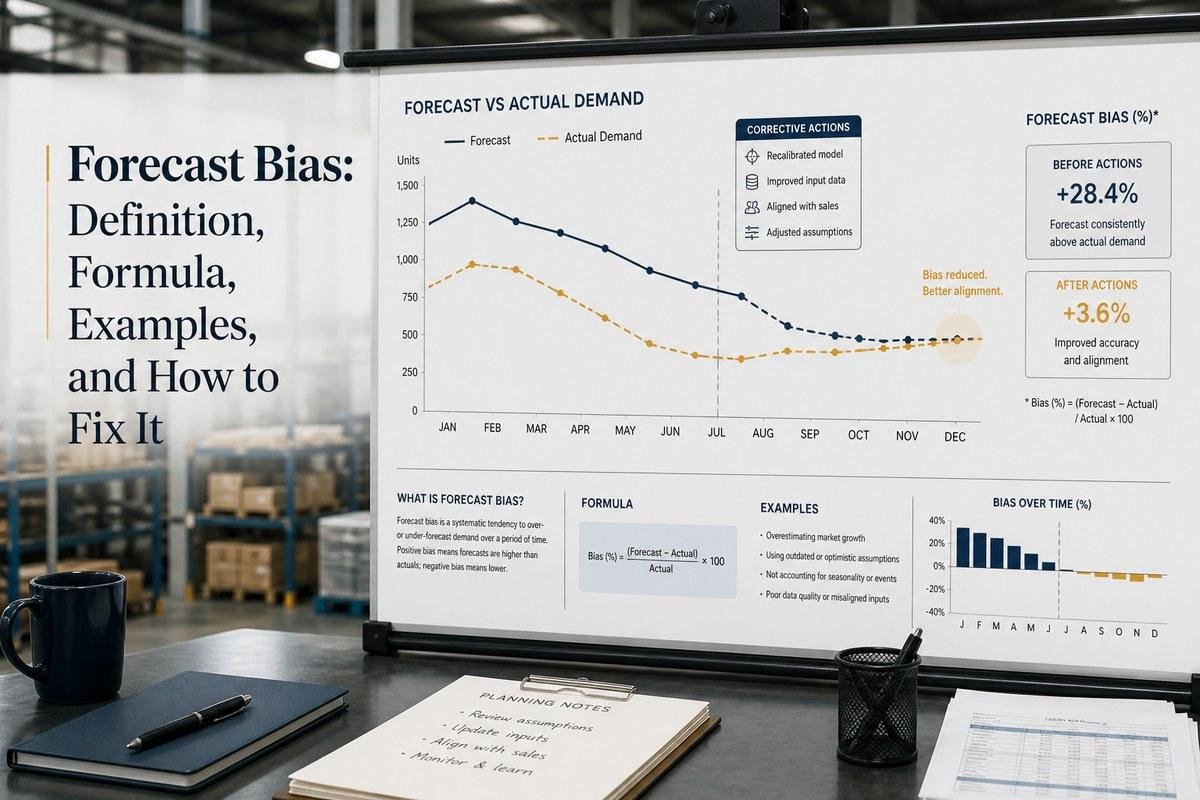
Forecast Bias: Definition, Formula, Examples, and How to Fix It
Forecast bias is the tendency for forecasts to be consistently higher or lower than actual demand. A forecast can be wrong without being biased:…
Sales Forecasting in Manufacturing: Lessons from Dave Garwood
Dave Garwood’s archived RDGarwood articles treated sales forecasting as a management process, not a statistical contest. The recurring idea was practical: create one accountable…

What Is Sales and Operations Planning? A Practical S&OP Guide
Sales and operations planning (S&OP) is a recurring management process that turns demand, supply, product, and financial information into one feasible plan for the…

Demand Review Process: How to Run a Monthly Demand Consensus Meeting
The demand review process is the monthly cycle in which sales, marketing, and demand planning turn a statistical baseline into one agreed, unconstrained demand…

Forecast Accuracy Metrics: MAPE, WAPE, MAD, RMSE, and Bias Compared
Forecast accuracy metrics quantify how far demand forecasts miss actual demand. The five that matter in manufacturing are MAPE, WAPE, MAD (also called MAE),…